



Technology helps improve lives of people with disabilities









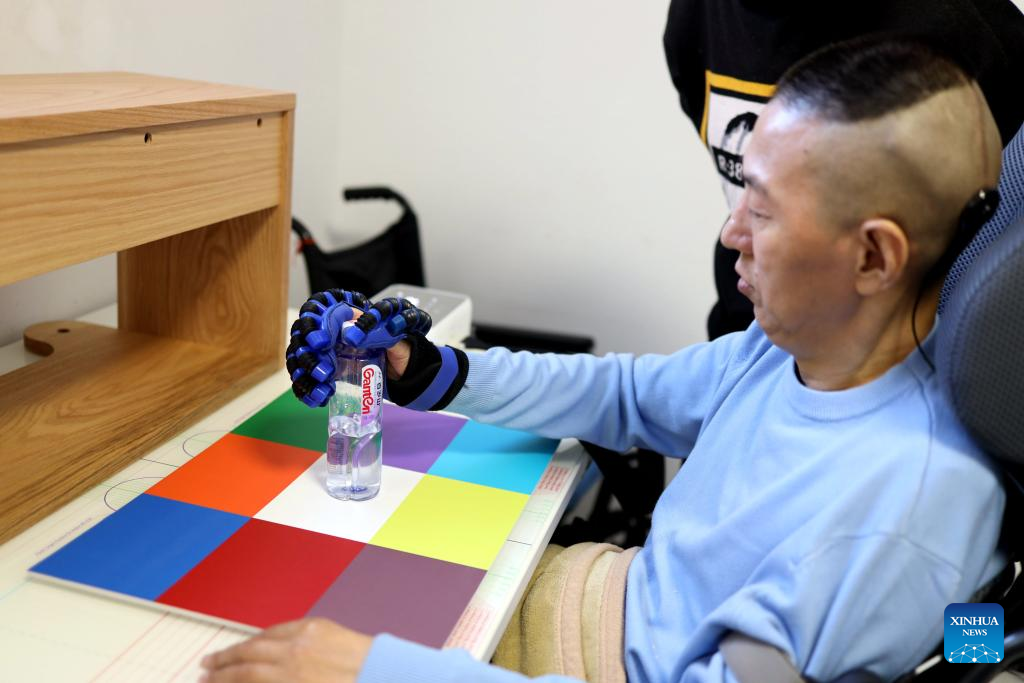
Brain-computer interface
Brain-computer interface technology collects electroencephalogram data from the cerebral cortex through signal acquisition equipment, and then converts them into signals that can be recognized by computers after processing such as amplification, filtering, and A/D conversion. Then, these signals are preprocessed and feature signals are extracted for pattern recognition, and finally converted into specific instructions for controlling external devices to achieve control of external devices.
This technology therapy is still relatively new. In October, Xuanwu Hospital and Tsinghua University School of Medicine successfully completed the first implantation of wireless minimally invasive implantable BCI clinical trial. This advancement enabled a quadriplegic patient to use brain electrical activity to autonomously control pneumatic gloves in order to drink water.
Several national and local policies have been implemented in support of brain-computer interface technology. It is anticipated that this technology will be widely utilized in medical rehabilitation in the future, assisting patients and disabled individuals with tasks such as computer usage, controlling household appliances switches, limb control, aiding in rehabilitation training, etc., and ultimately enhancing their quality of life.


- Zhejiang couple faces extortion probe over alleged vegetable poisoning
- Video of monkeys escaping rain in Guizhou goes viral
- Authorities expose eight cases of illegal land use and ecological damage
- Travel by Shanghai residents to Jinmen, Matsu set to resume
- Young technicians tackle ice in railway tunnels for safe train services
- China's urban-rural income gap narrows