



Ancient poems capture the soul of Mid-Autumn Festival









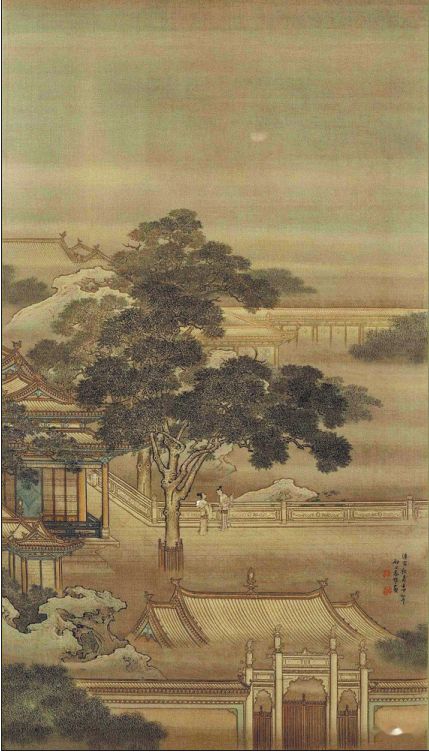
According to legend, those who rose up against the Yuan Dynasty (1271-1368) rulers, led by Zhu Yuanzhang, the would-be founding emperor of the Ming Dynasty (1368-1644), hid the message for a revolt planned for the night of the festival in mooncakes to be distributed among those taking part in the rebellion. The legend, whose authenticity can never be proven, added to the fable surrounding the festival and its best-known food.
At the center of the tale is Chang'e, wife of the legendary archer Hou Yi who shot down nine of the 10 suns that hung in the sky, thus saving the Earth from their scorching heat. Having secretly taken a large dose of an elixir of immortality meant for both herself and her husband, Chang'e floated off into the sky, where she had no choice but to endure self-inflicted solitude.
Tang Dynasty poet Li Shangyin (813-858) wrote these words on the fate of the woman to whom mooncakes are nominally dedicated: "Chang'e must have been remorseful, nursing a broken heart in the immensity of the night sky."
Food historians have argued that the Tang Dynasty (618-907), noted for its openness and frequent exchanges with realms far beyond China, must have made an impact on the nation's culinary traditions. Mooncakes, whose fillings range from lotus seed paste to salted duck egg yolk resembling a full moon, may once have been called hu bing, or cakes from a foreign land (to the empire's west, where the Sogdian merchants traveled the Silk Road).
The authenticity of this remains highly debatable, but one thing is certain — during that time, Mid-Autumn Festival, also known as Moon Festival, became deeply ingrained in popular culture. It was only a matter of time before men of words took note.


- Local governments signal their policy priorities for new year
- Whole roasted lamb lands Chongqing restaurant in trouble
- Early land plants reshaped Earth 30m yrs earlier than thought, study finds
- Shanghai records double-digit consumption growth during the Chinese New Year
- China Railway Guangzhou Group transports over 50m passengers since the start of travel rush
- Holiday records a new high in tourist trips and tourism-related spending








