



Hundreds of works on traditional Tibetan medicine go digital









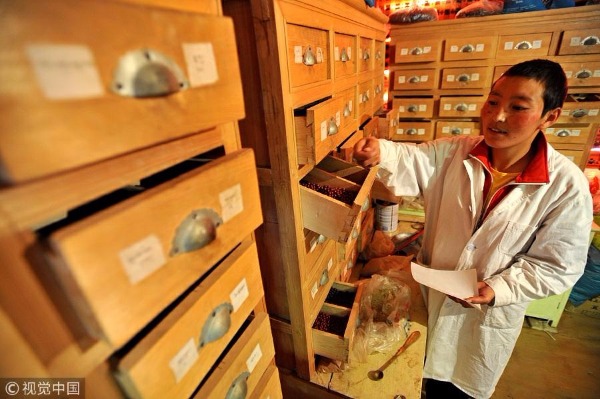
XINING -- The Qinghai Tibetan medicine research institute has completed the digitalization of more than 600 works on traditional Tibetan medicine.
The books and documents were created between the 7th century and the early 20th century.
"It's of great significance to share the valuable research materials with public through digitalization," said Khardrogy, director of the institute's literature information center.
Digitalization can help preserve the original rare ancient books and documents, and provide a more convenient platform for knowledge exchange, Khardrogy added.
There are more than 5,000 ancient works on traditional Tibetan medicine, but many are damaged or lost due to poor storage among other factors.
The institute has dispatched researchers to other parts of China and more than 10 countries including Britain, Italy and the United States, collecting over 1,000 documents. More than 600 have been put into a database, together with introductions to thousands of traditional Tibetan medicinal materials and preparations, 300 diagnoses and treatments as well as 800 academic journals.
Tibetan medicine, known as Sowa Rigpa in Tibetan, has a history of over 2,000 years. It was added to China's intangible cultural heritage list in 2006.




- Xi calls on China, Britain to jointly advocate, practice true multilateralism
- China ready to actively consider granting unilateral visa waiver to British people: Xi
- Xi sees win-win results as essence of China-Britain economic, trade cooperation
- Xi says China will never pose threat to other countries no matter how it grows
- China, Britain agree to develop long-term, stable comprehensive strategic partnership
- Chen Xuyuan, Li Tie banned for life from football